
An engaging workshop, a spectacular performance and a fascinating exhibition brought the cultural traditions of Kerala to life at Milton Keynes Museum, delighting an audience of more than 60 people.
By Philip Abraham | Kerala Link
The sights and sounds of Kerala came alive at Milton Keynes Museum as the Kala Chethena Kathakali Company presented a fascinating cultural experience combining a Kathakali workshop, live music, traditional storytelling and an exhibition showcasing the rich heritage of Kerala.
It was much more than a conventional cultural performance. The event offered an opportunity for people of different backgrounds and generations to experience Kerala’s traditional arts at close quarters, understand their historical significance and participate in the musical traditions that accompany one of India’s most distinctive classical dance-drama forms.
More than 60 people attended, with the audience actively participating in the workshop and engaging enthusiastically with the artists.
A musical introduction to the world of Kathakali
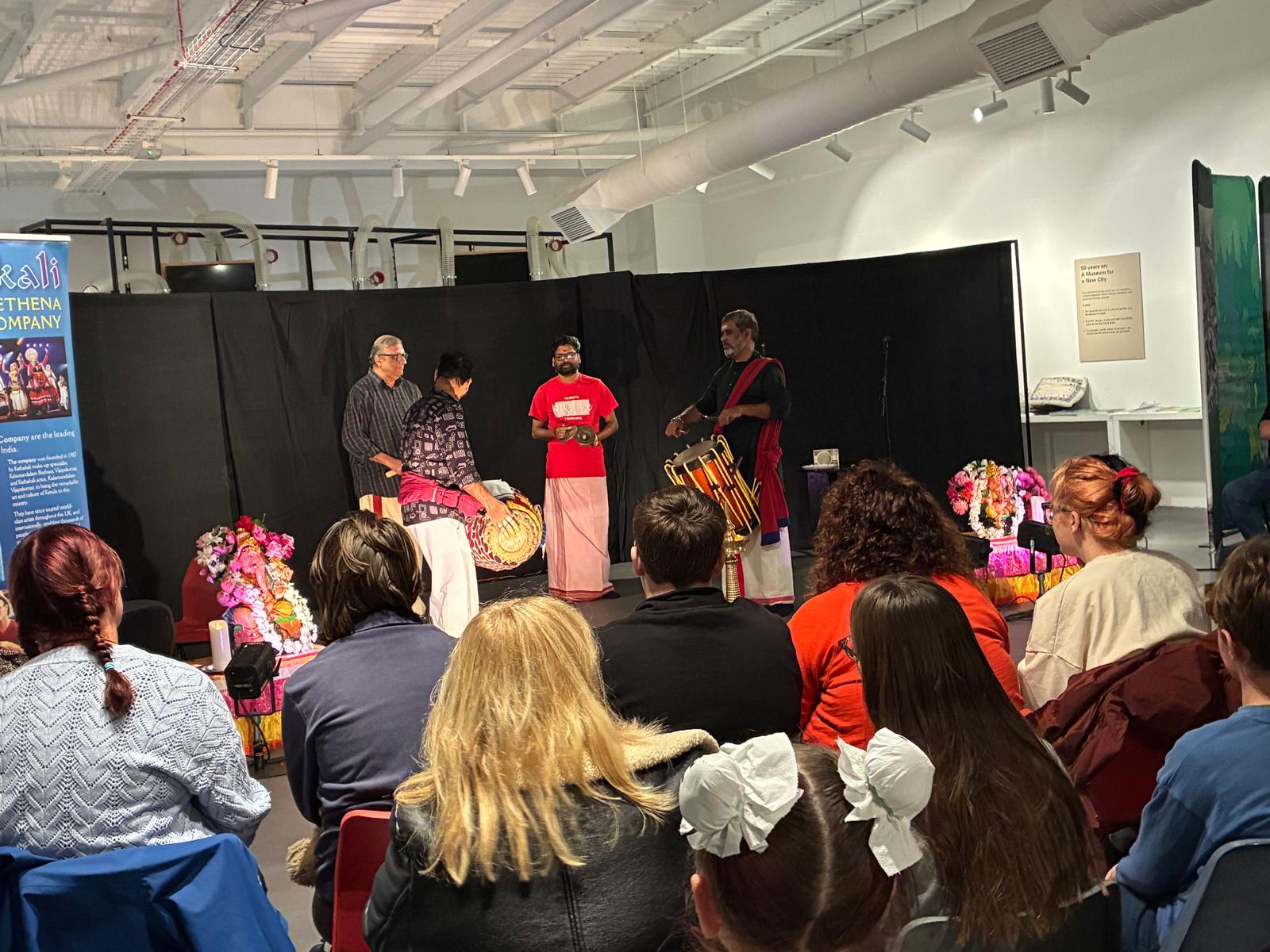
The programme began with a lively musical introduction, featuring traditional percussion instruments including the powerful chenda, thabala and the distinctive metallic chengila. Their rhythmic sounds immediately created an atmosphere associated with Kerala’s traditional temple arts and Kathakali performances.
The workshop then took an interesting interactive turn. Rather than simply listening to the musicians, members of the audience were invited to experience the fundamentals of Indian classical music.
Beginning with the sacred sound of Om, participants were introduced to the basic musical notes – Sa, Ri, Ga, Ma, Pa, Dha, Ni, Sa. The audience followed the musical exercises, listening, repeating and gradually becoming familiar with the sounds and rhythms.
It was particularly encouraging to see so many people participating enthusiastically. For children and adults unfamiliar with Indian classical music, this was an enjoyable introduction to the musical foundations of Kathakali.
The experience also demonstrated that traditional art forms need not remain distant or difficult for newcomers to appreciate. With the right introduction and an opportunity to participate, even complex musical traditions can become accessible and enjoyable.
Exploring Kerala’s cultural heritage
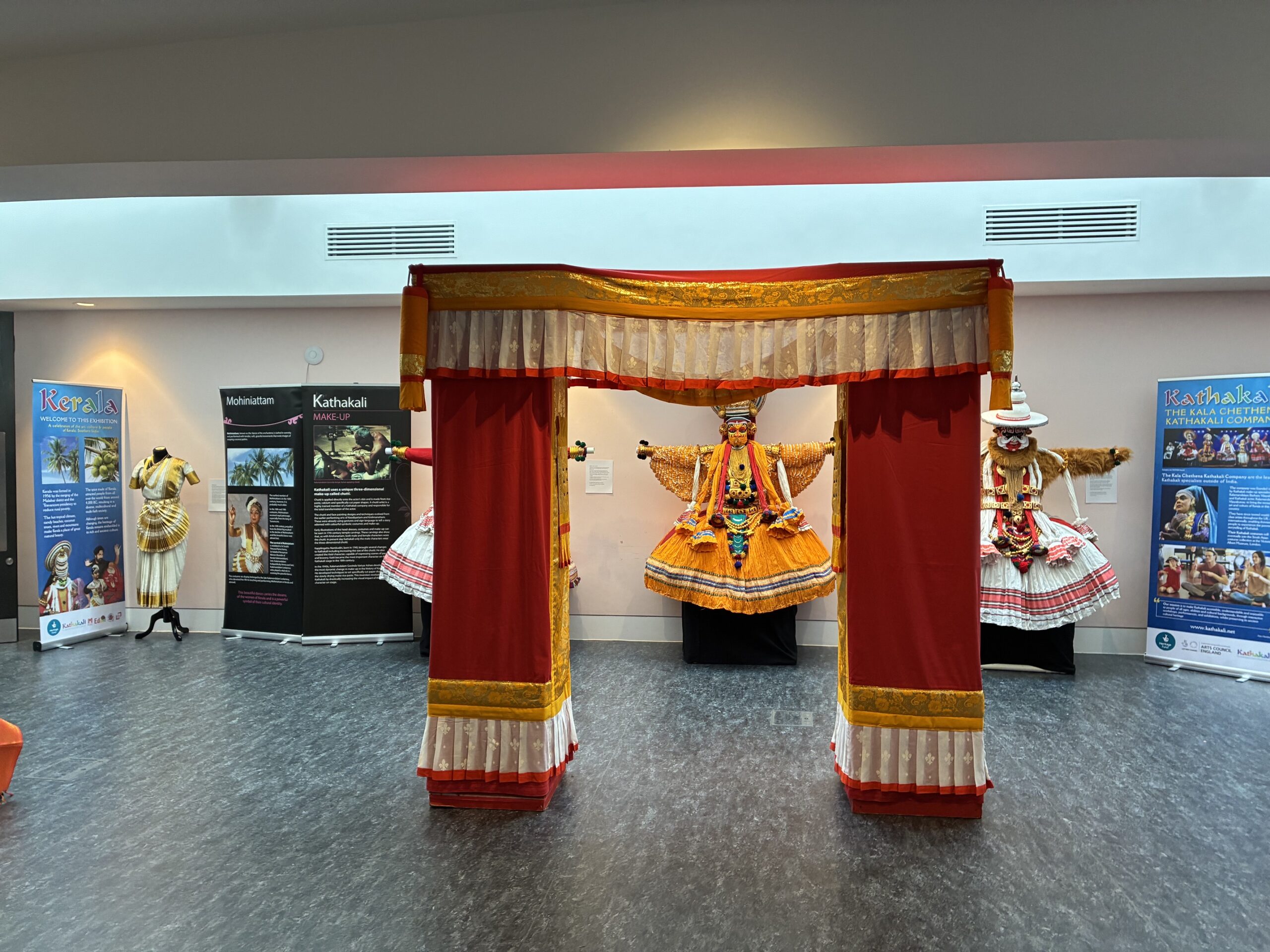
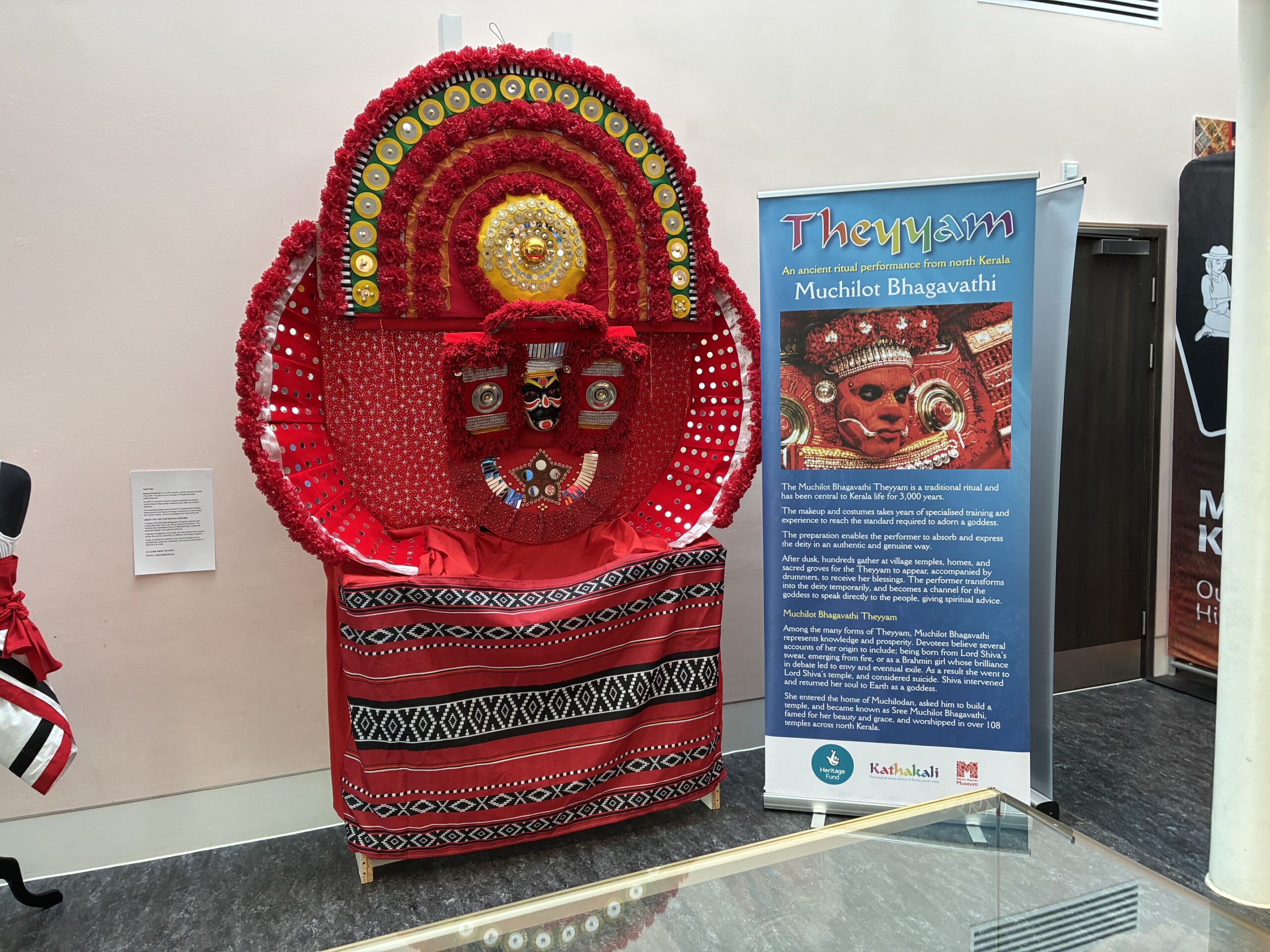
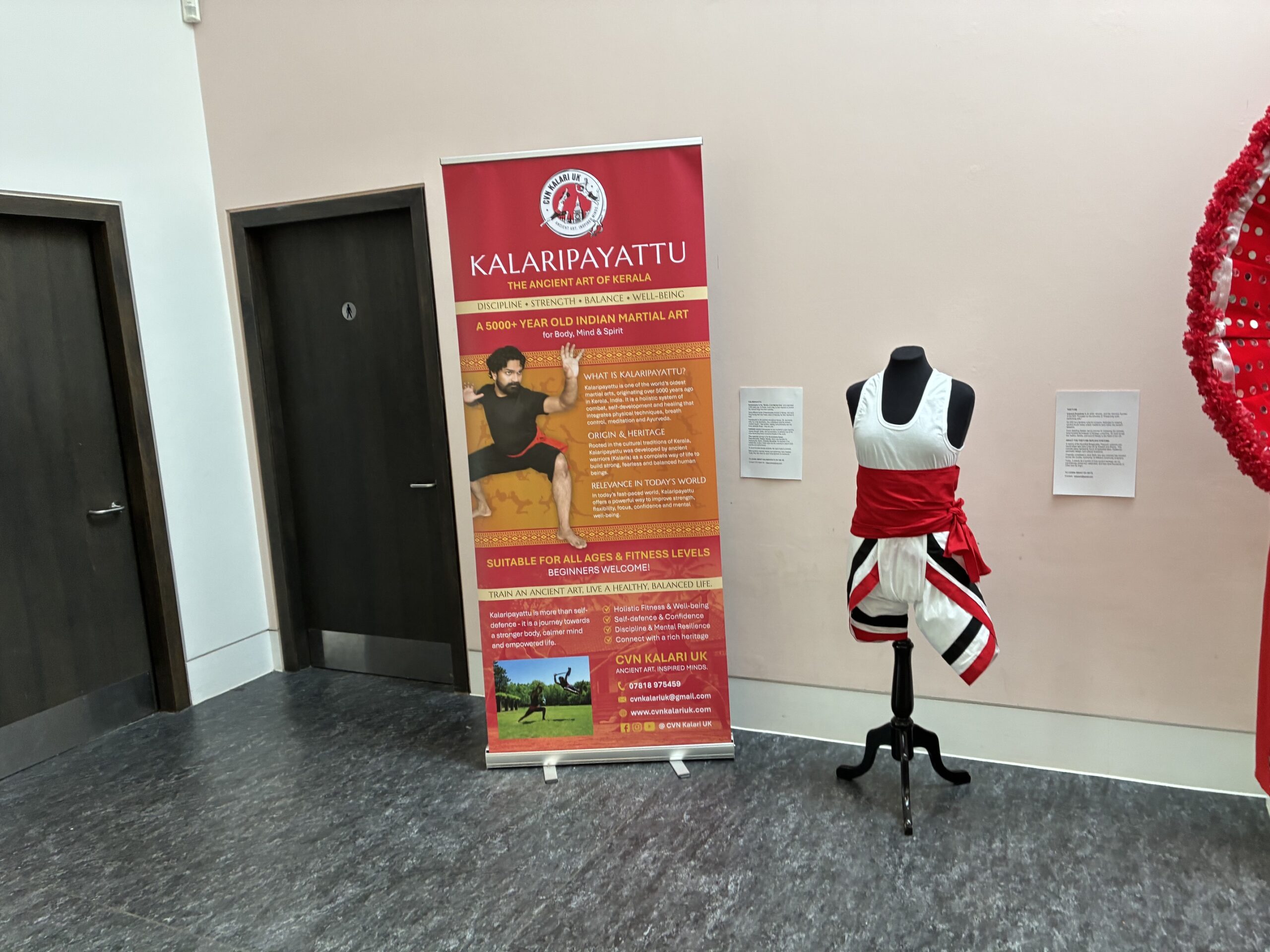
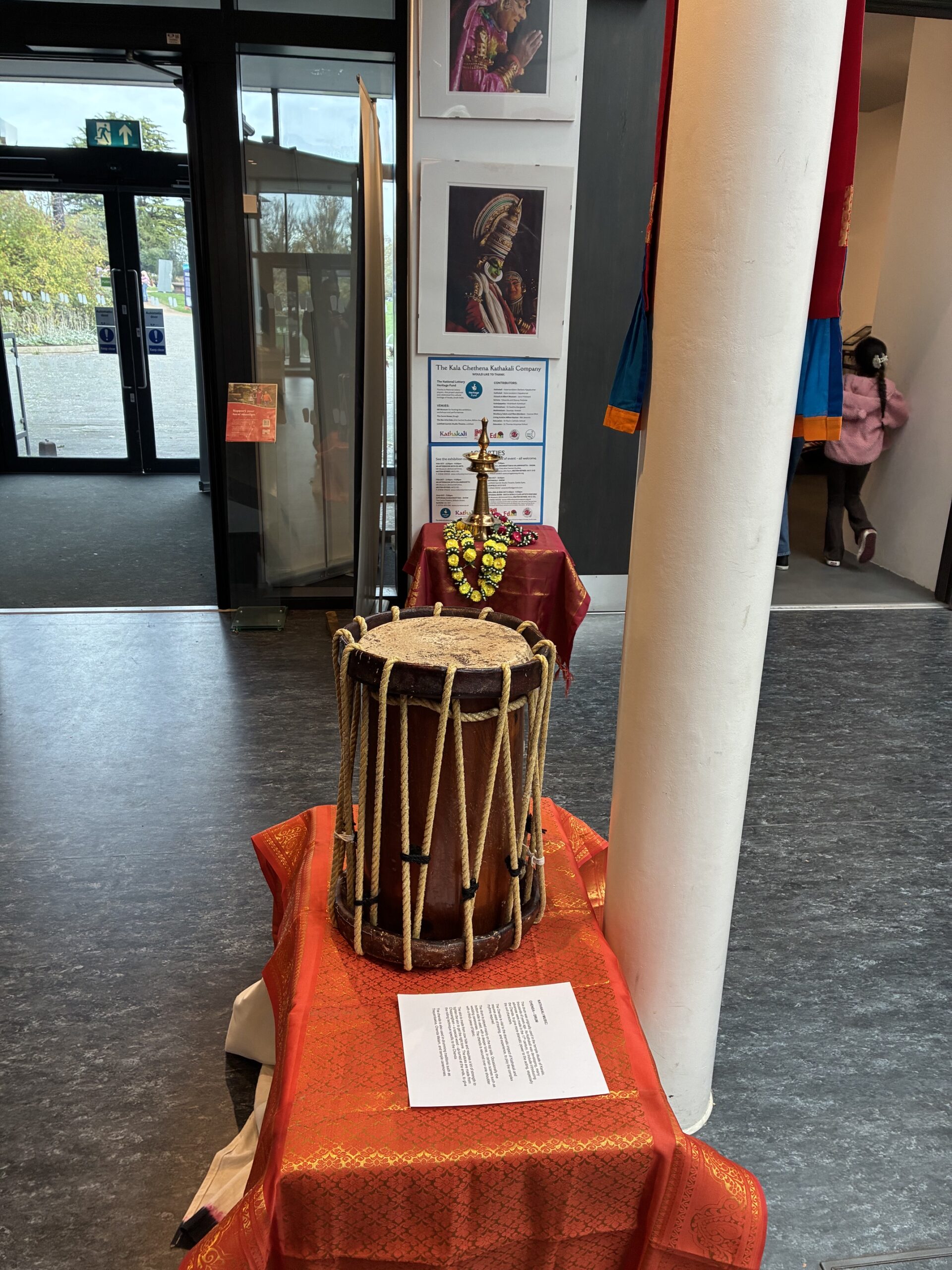
Alongside the workshop, the museum hosted an exhibition of Kathakali artefacts, traditional costumes, photographs and objects reflecting everyday life in Kerala.
One of the interesting aspects was the presentation of traditional clothing worn by Kerala’s different religious communities. Visitors could explore the distinctive dress traditions of Hindus, Christians and Muslims, gaining an insight into the state’s multicultural social fabric.
The traditional two-piece women’s attire, known as mundum neriyathum or set mundu, is particularly associated with Kerala. It consists of a lower mundu and a separate upper cloth, the neriyathu. Different communities have also developed their own distinctive styles of dress, reflecting their customs, history and cultural influences.
The exhibition helped illustrate an important aspect of Kerala’s identity: despite its religious and cultural diversity, its communities share a rich history, with many traditions developing alongside one another.
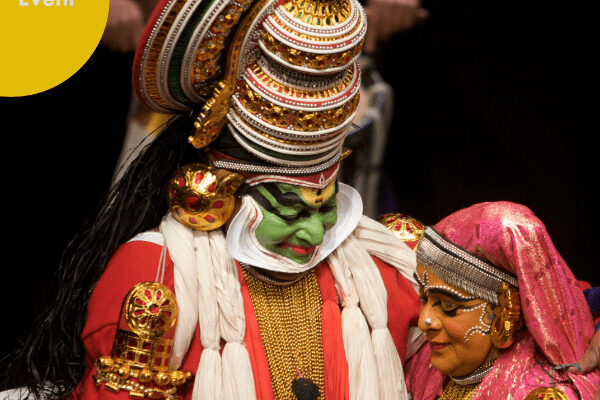
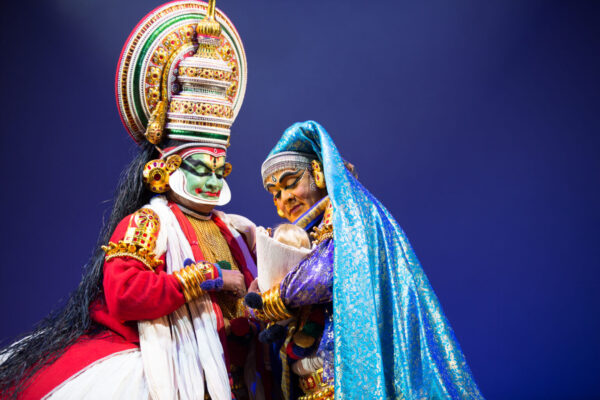
The Kathakali displays were equally fascinating, revealing the extraordinary craftsmanship behind the elaborate costumes, headgear, ornaments and facial makeup that transform performers into the characters of epic stories.
The Kathakali and Kerala exhibition at Milton Keynes Museum ends on November 7, 2026.
Barbara Vijayakumar shares the story of Kathakali
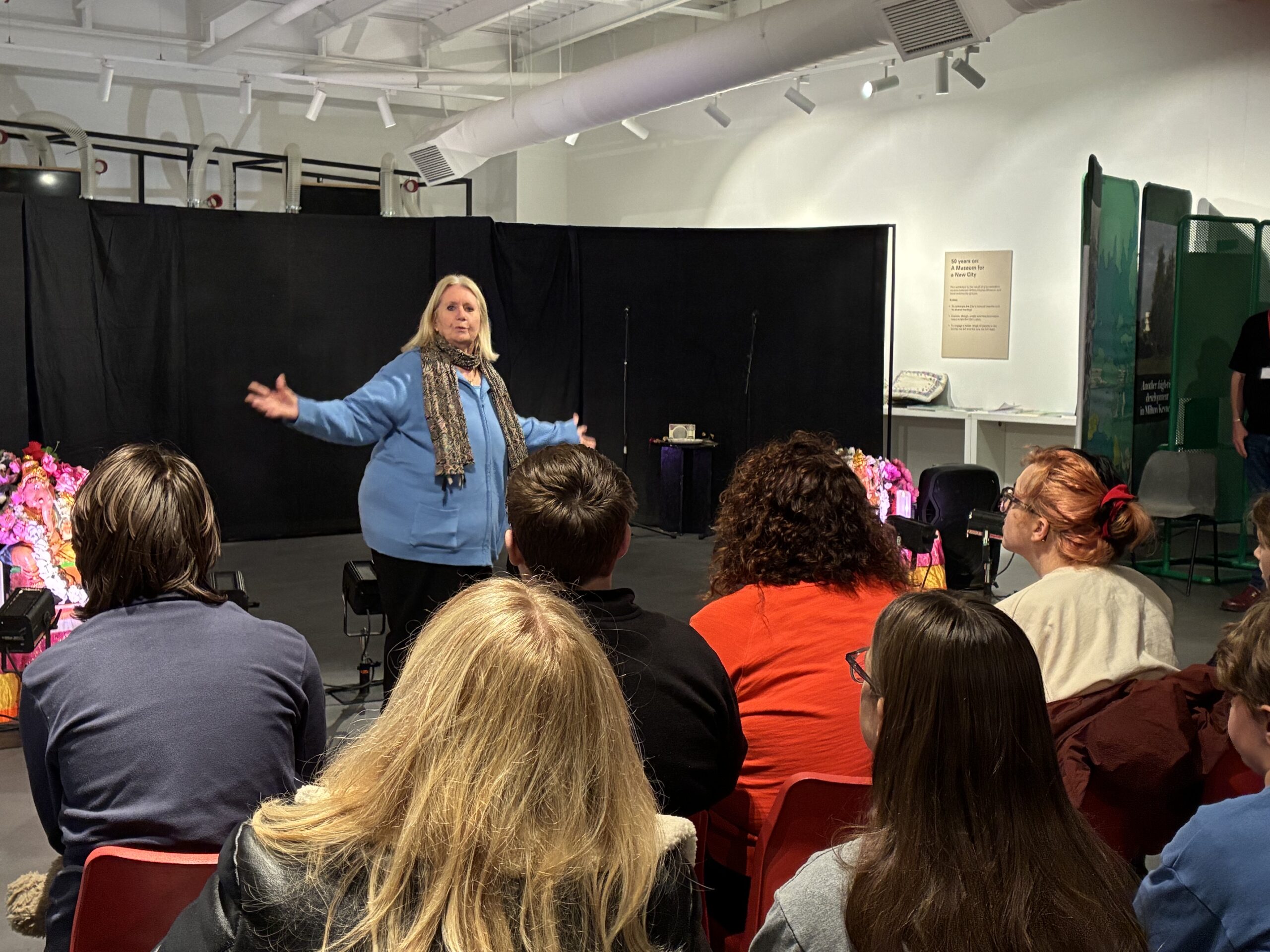
Kalamandalam Barbara Vijayakumar, who has devoted much of her life to the preservation and promotion of Kathakali, provided an informative introduction to the art form.
She spoke about the traditions and distinctive features of Kathakali and shared something of her own journey into this fascinating world of Kerala’s performing arts.
Her presentation helped the audience understand that Kathakali is not simply a colourful dance performance. It is a highly disciplined theatrical tradition involving years of training in body movements, facial expressions, eye movements, hand gestures, music and storytelling.
The intricate makeup and elaborate costumes are only one part of the art. The performer must also communicate a wide range of emotions through carefully controlled expressions and movements, often without uttering a single word.
For many in the audience, this introduction provided valuable context before the stage performance.
Kiratham – The Hunter: The encounter between Arjuna and Lord Shiva
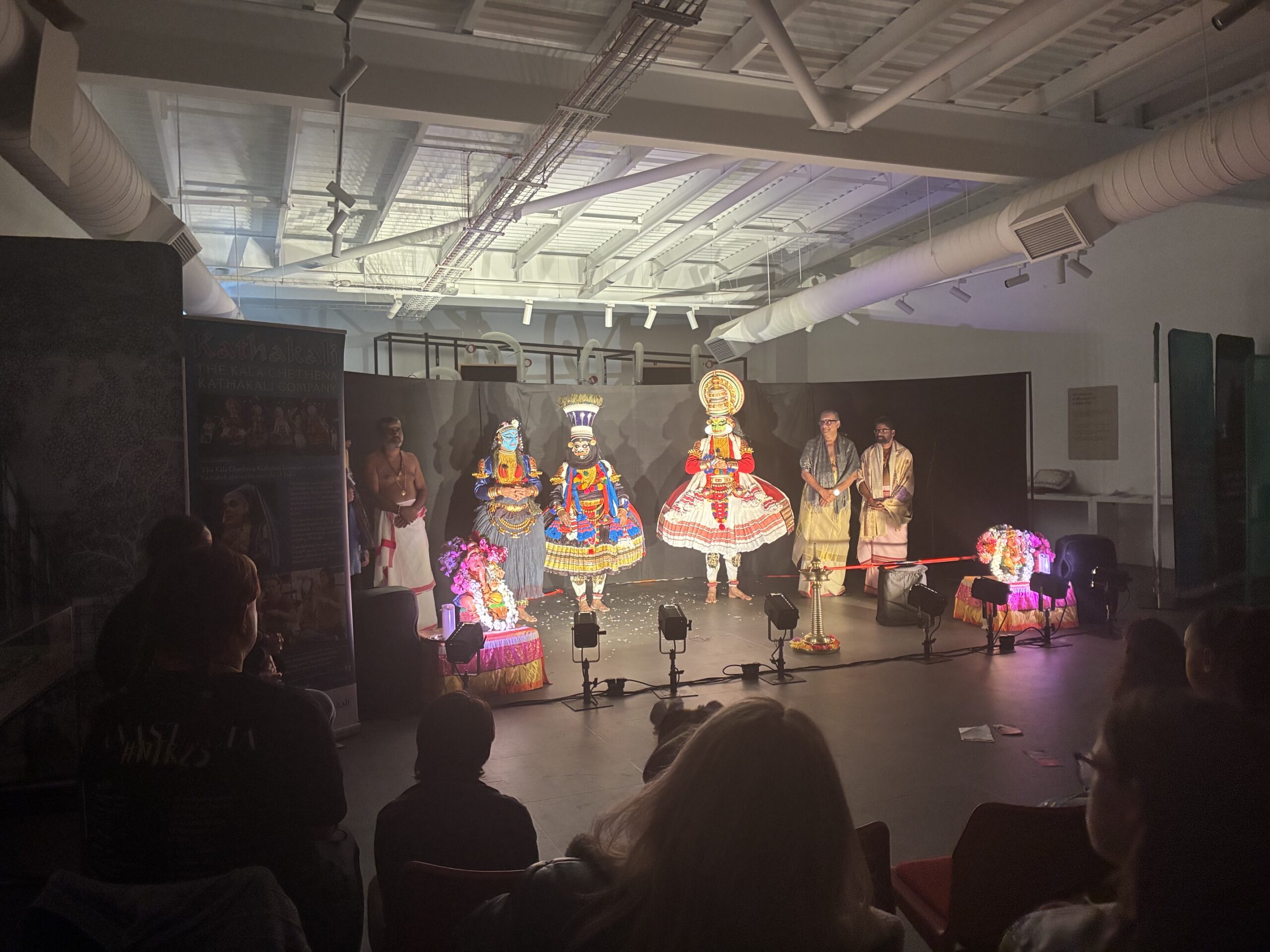
The highlight of the programme was the Kathakali presentation of Kiratham (The Hunter), a celebrated episode based on the Mahabharata.
The story recounts the encounter between Arjuna, the great warrior of the Pandavas, and Lord Shiva, who appears in disguise as a tribal hunter. Accompanied by Parvathi, disguised as a huntress, Shiva appears before Arjuna as Kiratha, a fierce hunter.
Arjuna, confident in his extraordinary archery skills, unleashes a succession of powerful weapons against his opponent. But the hunter proves impossible to defeat. In the dramatic interpretation of the story, Arjuna’s weapons lose their destructive power, with his arrows transforming into beautiful Thechi (jungle geranium) flowers.
Through its powerful expressions, stylised movements and dramatic storytelling, Kiratham provided an excellent opportunity for the audience to appreciate the depth and sophistication of Kathakali.
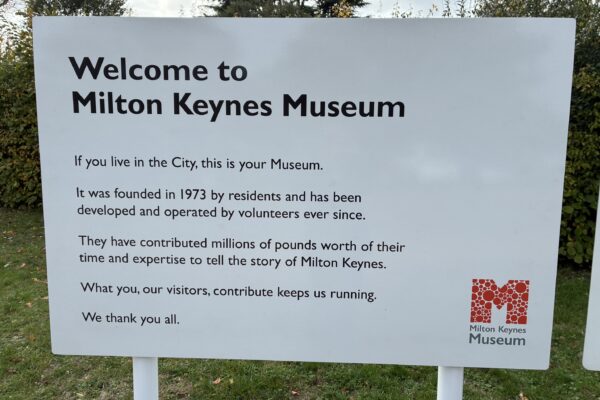
Milton Keynes Museum: A wonderful place to explore
Milton Keynes Museum is itself a remarkable attraction, offering visitors a journey through the history of the region and the lives of the people who shaped it.
Set within a historic Victorian farmstead at Stacey Hill, the museum preserves an impressive collection of objects, buildings and displays illustrating everyday life, rural traditions and industrial development.
Visitors can step into a recreated Victorian street, explore old shops, discover a traditional farmhouse and see historic farming equipment, printing machinery and transport collections. Its telephone gallery, with working examples of communication equipment from different periods, is another attraction that appeals to both children and adults.
The Kathakali workshop demonstrated how museums can become spaces not only for preserving local history but also for celebrating the cultural traditions of communities from around the world.
Keeping Kerala’s traditions alive in Britain
The Milton Keynes programme is another example of the valuable work undertaken by the Kala Chethena Kathakali Company in introducing Kerala’s traditional performing arts to wider audiences in Britain.
Founded by Kalamandalam Vijayakumar and Kalamandalam Barbara Vijayakumar, the company has spent decades promoting Kathakali through performances, demonstrations, workshops and exhibitions.
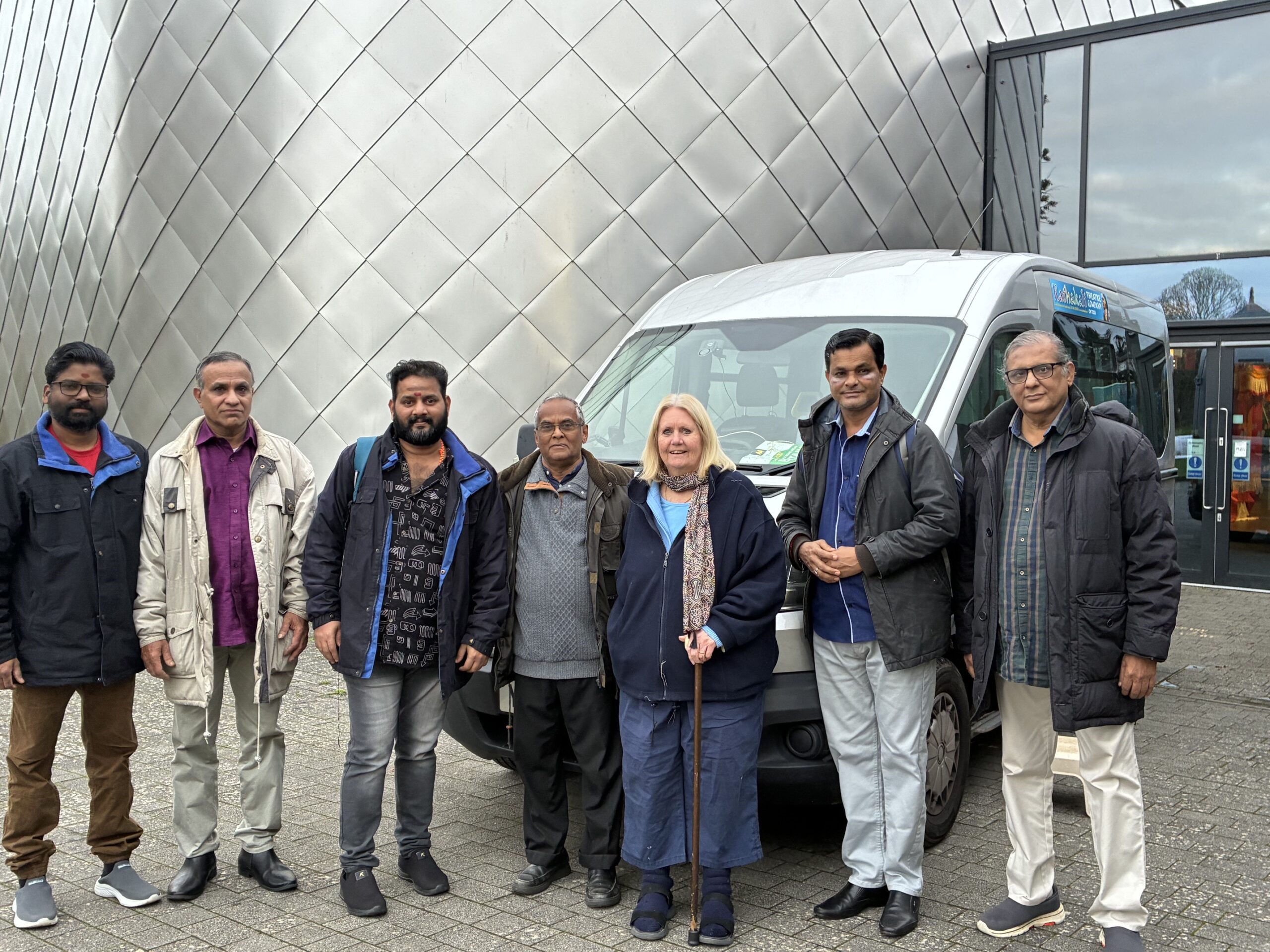
A wonderful day at a wonderful museum – and a memorable celebration of Kerala’s living artistic traditions.



Leave a Reply