
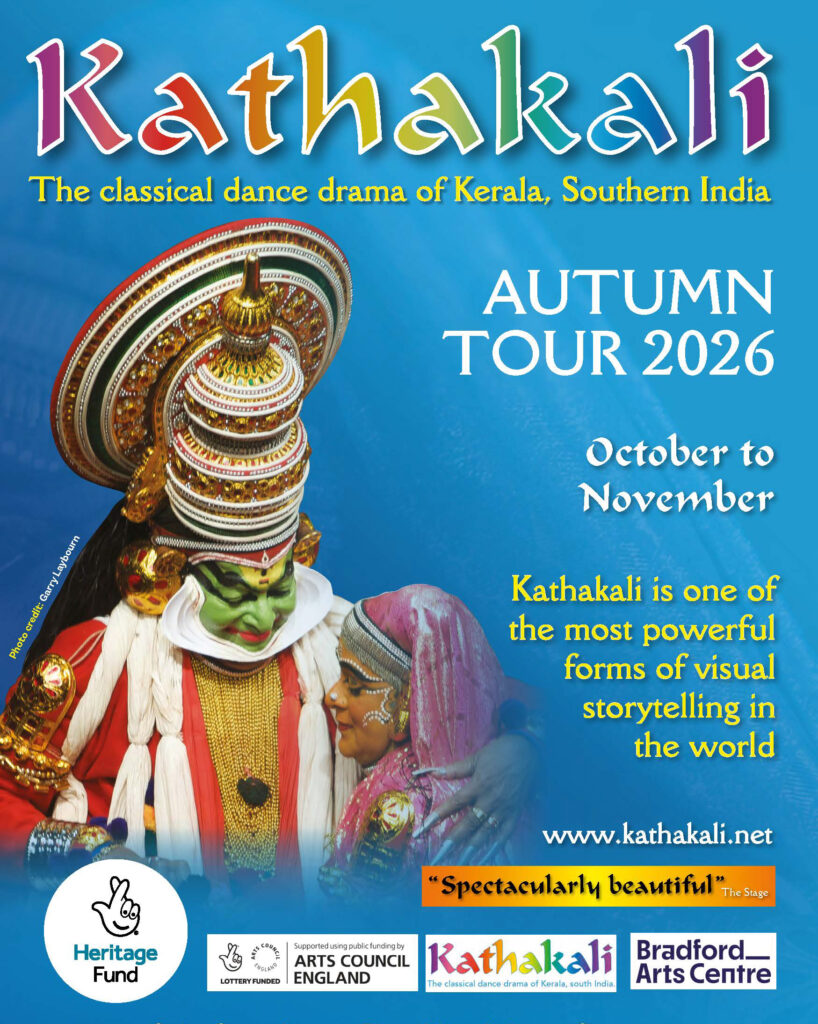
An extraordinary national tour Celebrating Kathakali, Mohiniattam and Kalaripayattu to audiences across the UK
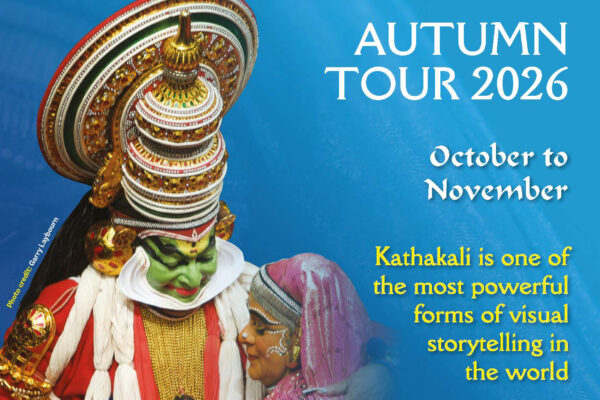
A vibrant, and rich celebration of Kerala’s artistic heritage is coming to stages, museums and cultural venues across Britain this autumn, as The Kala Chethena Kathakali Company presents its Kathakali UK Tour 2026.
Featuring a troupe of highly experienced artists from Kerala, India, the tour promises audiences a rare opportunity to experience the magnificent world of Kathakali, alongside performances and workshops in Mohiniattam and Kalaripayattu, an extensive exhibition and a series of special cultural events.
Running from 23 September to 7 November 2026, the programme will take Kathakali and the wider cultural heritage of Kerala to communities across England, with particularly important events in Milton Keynes, Liverpool, Bristol, London and Southampton.
The project is much more than a series of theatre performances. It is the culmination of two years of intense work by the company to bring leading Kathakali artists from Kerala to Britain, allowing audiences to encounter one of India’s most extraordinary theatrical traditions at close quarters.
The exhibition, performances and workshops together offer a unique opportunity to see, hear and experience Kerala’s traditional arts rather than simply read about them.
Bristol: A major highlight of the tour
Among the many venues on the national itinerary, Bristol will be one of the major highlights.
On 17 October, the full Kathakali company will perform at The Theatre, St Brendan’s College, Brislington, Bristol, in an event promoted by Adwaita Arts.
The Bristol programme is part of The Kala Chethena Kathakali UK Tour 2026, bringing top international artists from Kerala to the city.

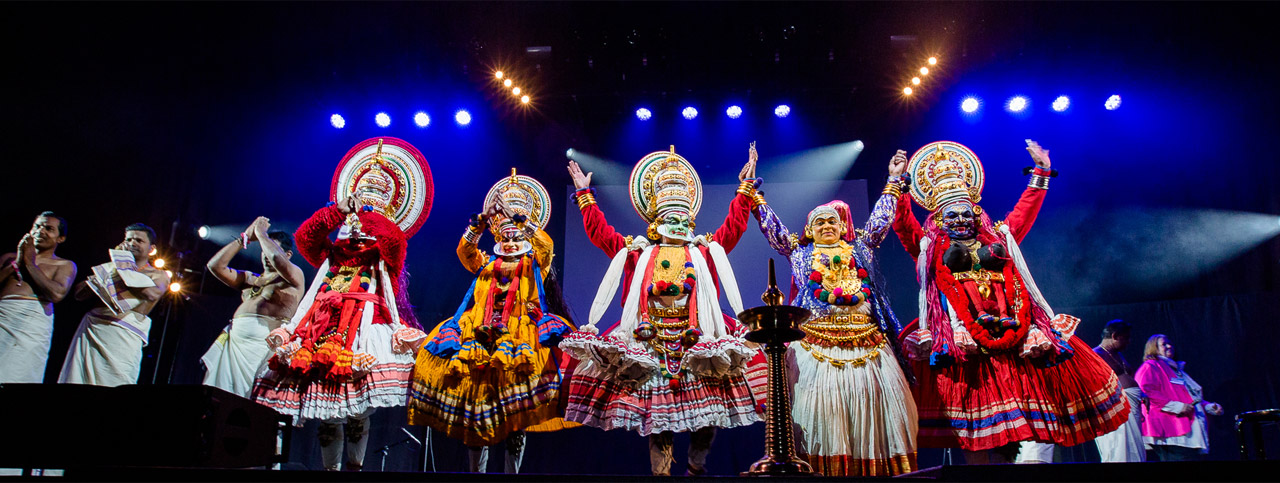
For Bristol audiences, this is an especially significant opportunity to experience the full spectacle of Kathakali — the extraordinary costumes, elaborate make-up, expressive eyes and facial movements, highly codified hand gestures, powerful footwork, live music and dramatic storytelling that have made Kathakali one of the world’s most distinctive forms of theatre.
The Kala Chethena Kathakali Company has previously brought Kathakali to Bristol, where performances have received an enthusiastic response. The company’s current tour website records the importance of the Bristol connection, including its earlier presentation of Kathakali as part of the SreeRaagam Festival of Indian Arts and Music.
The 17 October Bristol performance should therefore be regarded as one of the key dates on the 2026 tour.
More Details of Bristol Event: Facebook
CLICK HERE to book BRISTOL PERFORMANCE
Liverpool: Kathakali, Kalaripayattu and Mohiniattam
Liverpool will receive an equally impressive programme.
The tour begins its Liverpool autumn programme with a full company Kathakali performance at Liverpool World Museum on 4 October.

Then, on 9 October, audiences can explore the extraordinary martial tradition of Kerala through a Kalaripayattu martial arts workshop at Cardinal Heenan High School.
The following day, 10 October, Liverpool hosts a major cultural programme featuring:
- Full company Kathakali
- Kalaripayattu workshop and performance
- Mohiniattam performance
This makes Liverpool one of the most comprehensive stops on the tour.
The company’s website describes Kalaripayattu as an ancient martial tradition combining physical strength, mobility and agility with mental focus, while Mohiniattam is characterised by graceful, gentle and flowing movements.
Liverpool audiences will therefore have the chance to experience three very different but interconnected traditions from Kerala in one programme.
BUY TICKETS: Cardinal Heenan High School, Liverpool
Milton Keynes: The heart of the exhibition and cultural programme
Milton Keynes occupies a particularly prominent position in the 2026 project.
The centrepiece is an extensive exhibition at Milton Keynes Museum, running from 23 September until 7 November 2026.

The exhibition brings together:
- Kathakali costumes
- Kathakali photographs
- Mohiniattam costumes
- Kalaripayattu costumes
- Bharathanatyam costumes
- Traditional Kerala dress
- Kathakali headdresses and other objects associated with the tradition
The exhibition offers visitors an opportunity to understand the visual richness of Kerala’s performing arts and the extraordinary craftsmanship involved in creating the costumes and characters.
The accompanying programme also includes opportunities to see the artists and learn about the traditions behind the performances.
On 10 October, Milton Keynes Museum hosts An Afternoon of Kerala Culture, inviting audiences to learn about the art, culture and people of Kerala.
On 17 October, the museum presents An Afternoon with Kalaripayattu, exploring the history and background of this ancient martial art.
There will also be full company Kathakali performances at Milton Keynes Museum on 28, 29 and 30 October, making Milton Keynes one of the most important destinations on the entire tour.
The Milton Keynes exhibition is a celebration of the art, culture and people of Kerala and the exhibition runs alongside performances and workshops.
BOOK NOW: Milton Keynes Museum
London: A special evening at the Nehru Centre
A further major highlight will be the Nehru Centre in London on 22 October.
This special London presentation provides an opportunity to bring Kerala’s classical theatrical heritage to one of the UK’s important cultural and diplomatic venues.
Events at Nehru Centre are free.Booking Rules: However, seat reservations are mandatory due to limited capacity in their intimate theatre.
Book Here: Nehru Centre. The event will appear in the Nehru Centre event page in October
The combination of Kathakali’s spectacular visual theatre with the cultural setting of the Nehru Centre promises to make this a particularly memorable occasion.
What makes Kathakali so extraordinary?
For audiences who have never encountered it before, Kathakali can appear almost other-worldly.
Originating in Kerala, Kathakali developed as a highly sophisticated form of visual theatre combining drama, dance, music, elaborate costumes and distinctive make-up.
The attached exhibition material describes Kathakali as a masterpiece of visual theatre that originated in the temples of Kerala around 500 years ago and uses drama, dance, costume and make-up to tell stories reflecting social values.
The transformation of the performers is one of the great attractions.
An actor can spend considerable time being transformed through elaborate make-up and costume into a larger-than-life character. The eyes, eyebrows and facial muscles become important instruments of expression, while hand gestures — mudras — communicate meaning and emotion.
The result is theatre without the need for conventional spoken dialogue to carry the entire story.
Love, devotion, jealousy, courage, betrayal, anger, compassion and conflict are communicated through an extraordinary combination of movement, facial expression, gesture, music and rhythm.
For audiences unfamiliar with the tradition, seeing the performers before and after their transformation can itself be an unforgettable part of the experience.
The company specifically invites audiences, where arrangements permit, to see the elaborate make-up process, view the costumes and meet the artists before the performance.
The stories: Daksha Yaga, Dussassana Vadam and Hima Sundari
The 2026 tour also provides an opportunity to encounter some very different Kathakali narratives.
According to the programme information supplied for the tour, Daksha Yaga will be presented at selected venues including Poole, the Nehru Centre and Southampton.
The story comes from the powerful mythology surrounding Daksha’s sacrifice, and the conflict involving Daksha, Sati and Shiva. It provides Kathakali performers with a rich dramatic canvas of devotion, pride, anger, tragedy and divine power.
At Liverpool on 10 October and at Bordon, audiences will see Dussassana Vadam, another powerful traditional Kathakali story.
At the other tour performances, the company will present Hima Sundari.
Hima Sundari is particularly interesting because it demonstrates how Kathakali can engage with a story familiar to contemporary audiences while retaining the distinctive vocabulary of Kerala’s classical theatre.
The Kala Chethena Kathakali Company’s history records that Hima Sundari was adapted from the familiar Snow White story and developed for Kathakali by Kalamandalam Vijayakumar. The character of the Prince was developed with the extraordinary creative contribution of the late Padma Shri Kalamandalam Gopi.
This makes Hima Sundari an accessible gateway into Kathakali for people seeing the art form for the first time.
Mohiniattam: Grace, elegance and serenity
Kathakali’s powerful dramatic energy is complemented by the contrasting beauty of Mohiniattam, Kerala’s graceful classical dance tradition.
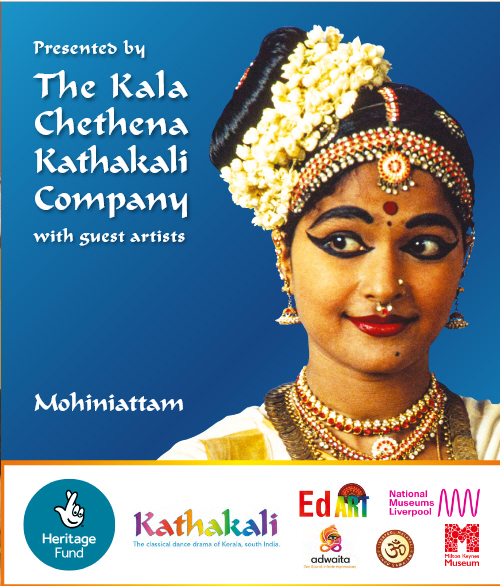
Where Kathakali is often characterised by powerful movements and dramatic characters, Mohiniattam is renowned for its flowing movements, subtle expressions and elegance.
The tour flyer describes Mohiniattam as being characterised by gentle movements carried out with grace and tenderness.
Several tour events combine Kathakali with Mohiniattam, giving audiences the opportunity to experience two very different dimensions of Kerala’s classical performing arts.
Liverpool on 10 October and Milton Keynes on 24 October are among the venues where the programme includes Mohiniattam alongside Kathakali and Kalaripayattu.
Kalaripayattu: Kerala’s ancient martial tradition
Another spectacular element of the tour is Kalaripayattu.
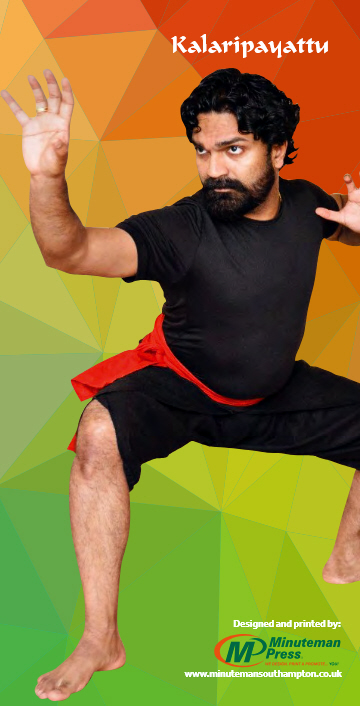
Often described as one of the world’s oldest martial traditions, Kalaripayattu developed as a system of physical and mental training associated with Kerala.
The exhibition material explains that the art was traditionally used to train warriors and emphasises strength, mobility, agility and concentration.
Audiences will not simply watch the art form. The programme provides opportunities to take part in workshops and discover some of the history and techniques behind it.
The Liverpool programme includes a Kalaripayattu workshop on 9 October, followed by a workshop and performance on 10 October.
Milton Keynes also hosts An Afternoon with Kalaripayattu on 17 October, while the programme at The Box Arts Club on 24 October includes a Kalaripayattu workshop and performance.
From the stage to the workshop
One of the most important aspects of the tour is its educational programme.
Rather than presenting Kerala’s traditional arts simply as performances to be watched, the company is creating opportunities for audiences, families, children and students to engage directly with the artistic traditions.
The programme includes:
Kathakali drama and mask-making
Participants can study the distinctive face designs of Kathakali characters and create their own masks.
The exhibition material specifically describes mask-making as an opportunity for families and children aged six and over to study traditional Kathakali make-up designs and use their imagination to create their own designs.
Costume conservation
A special Kathakali Costume Conservation Masterclass was held at Westbury Arts Centre in Milton Keynes, highlighting the craftsmanship and preservation required to maintain these elaborate costumes.
Kalaripayattu workshops
Participants can learn about the history and techniques of Kerala’s ancient martial art.
These workshops help demonstrate that cultural heritage is not something frozen in the past. It survives because knowledge is passed from one generation to the next.
A living exhibition of Kerala
The Milton Keynes Museum exhibition is particularly valuable because it places the performing arts within their wider cultural context.
Visitors can see costumes and photographs and explore traditional Kerala dress alongside the visual elements associated with Kathakali, Mohiniattam and Kalaripayattu.
The exhibition material highlights the extraordinary Kathakali headdresses and costumes and their historical association with Kerala’s temples.
The exhibition therefore becomes more than a display of beautiful objects. It provides an introduction to the artistic language, craftsmanship and cultural history behind the performances.
The national tour continues
Following the major October programme, the company continues across the country.
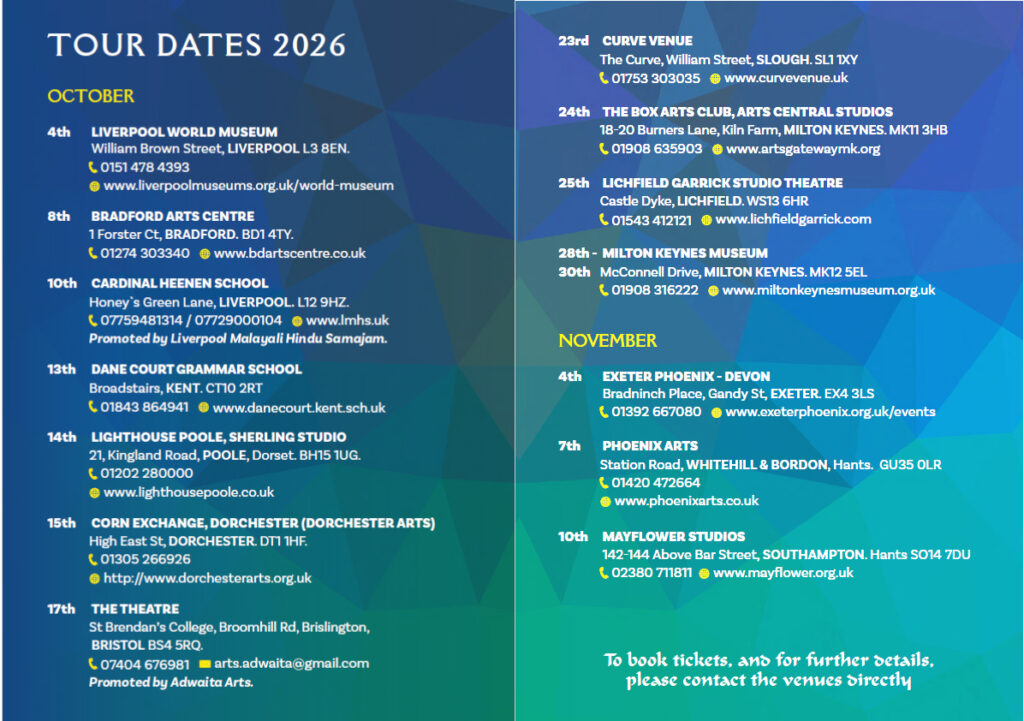
The confirmed forthcoming schedule includes:
23 September – 7 November
Milton Keynes Museum – Kathakali, Mohiniattam and Kalaripayattu exhibition
4 October – Liverpool
Liverpool World Museum – Full company Kathakali performance
8 October – Bradford
Bradford Arts Centre – Full company Kathakali performance
9 October – Liverpool
Cardinal Heenan High School – Kalaripayattu martial arts workshop
10 October – Liverpool
Cardinal Heenan High School – Kathakali, Kalaripayattu and Mohiniattam
10 October – Milton Keynes
Milton Keynes Museum – An Afternoon of Kerala Culture
14 October – Poole
Lighthouse Theatre – Full company Kathakali performance
15 October – Dorchester
Corn Exchange – Full company Kathakali performance
17 October – Bristol
The Theatre, St Brendan’s College – Full company Kathakali performance
17 October – Milton Keynes
Milton Keynes Museum – An Afternoon with Kalaripayattu
22 October – London
Nehru Centre – Special Kathakali presentation
23 October – Slough
The Curve – Full company Kathakali performance
24 October – Milton Keynes
The Box Arts Club – Kathakali, Kalaripayattu and Mohiniattam
25 October – Lichfield
Garrick Studio Theatre – Full company Kathakali performance
28–30 October – Milton Keynes
Milton Keynes Museum – Full company Kathakali performances
4 November – Exeter
Exeter Phoenix – Full company Kathakali performance
7 November – Bordon
Phoenix Arts – Full company Kathakali performance
10 November – Southampton
Mayflower Studio Theatre – Full company Kathakali performance and the tour’s concluding event
The official tour page confirms the forthcoming performance itinerary and describes the programme as including a new solo Kathakali performance, full company performances, the exhibition, Mohiniattam and Kalaripayattu performances, workshops and more.
Supported by heritage and community partnerships
The project has received important support for its celebration of Kerala’s cultural heritage.
The exhibition material acknowledges The National Lottery Heritage Fund, noting that National Lottery players have helped make it possible to celebrate the ancient heritage of Kerala within the wider community.
The tour’s promotional material also acknowledges its sponsors and supporters, including the Arts Council and The National Lottery Heritage Fund.
With numerous promoters involved across the country, not every local organisation’s logo can realistically appear on every promotional item. The important message, however, is that this is a collaborative national cultural project involving artists, venues, promoters, funders and communities.
An event not to be missed
For Malayalis, the tour is an opportunity to reconnect with one of Kerala’s greatest cultural traditions.
For Indian audiences, it is an opportunity to celebrate the extraordinary diversity of India’s performing arts.
And for those who have never seen Kathakali before, it is a chance to discover something genuinely remarkable.
Imagine entering a theatre and watching an actor gradually transformed by make-up, costume and headdress. Then the drums begin. The music rises. The character comes alive. A movement of the eyes communicates emotion. A hand gesture tells part of the story. A facial expression conveys anger, love, fear or sorrow.
That is the magic of Kathakali.
From Liverpool to Bristol, Milton Keynes to London, Poole to Southampton, Bradford to Bordon and beyond, Kerala’s extraordinary living heritage is coming to audiences across the UK.
The Kala Chethena Kathakali UK Tour 2026 is an event not to be missed.
Kerala’s artistic heritage is being presented not only to Britain’s Malayali and Indian communities, but to a much wider audience: families, schools, theatre-goers, museum visitors and people encountering Kathakali for the first time.
For tickets and the latest event information, audiences are advised to contact the individual venues/promoters. The Kala Chethena Kathakali Company’s official tour page provides the current national itinerary.



Leave a Reply