
A Critical Appraisal of Anil George’s Live Work
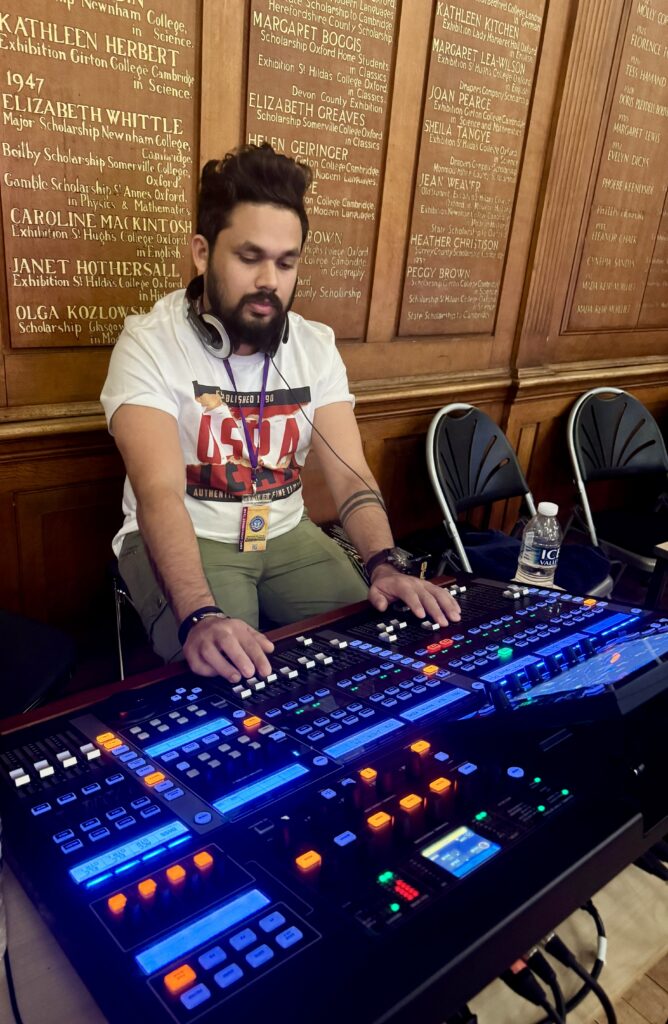
In today’s large live events, the most important artistic choices are often the quiet ones. The sound that reaches an audience can decide whether a performance feels immediate or distant, confident or uncertain. Audio engineer Anil George works to a clear principle: reliability is not the opposite of art; it is what lets art be heard.
George has worked across major events in the Middle East and the United Kingdom, from national ceremonies and city scale festivals to arena shows and touring productions. What links these very different settings is pressure: fixed schedules, large crowds, and no margin for failure. His approach is calm and disciplined. He sets levels so voices are strong without being harsh, keeps space in the system so loud moments do not distort, and avoids effects that distract from the music. In vocal sets, the words are clear, the tone stays natural, and the shape of the melody remains intact even at a distance.
This leads to a first, central question for live performance: In settings where failure is unacceptable, how far can engineers shape the artistic character of a performance rather than simply preserve its stability? George’s work suggests that stability is not passive. By protecting details in the voice and the music—soft consonants, breath, phrasing – he shapes what the audience can hear and feel. The choice to keep things clear and steady is not a lack of creativity; it is the choice that lets the performance reach the back of the venue without losing meaning.
In the UK, much of the work sits inside touring productions with tight standards. In this setting, a second question arises: Within tightly standardised touring systems, how audible can an individual engineer’s creative contribution be – and how should it be assessed within contemporary arts practice? Here, George’s contribution shows in small, steady decisions made through the day. Voices sit forward without sharpness. Drums carry weight without drowning the rest. Echo and reverb support distance without pulling focus. These are not flashy moves, but they decide whether a show feels balanced and true to the artist.
This is not an argument against invention. It is a case for the kind of creativity that fits the demands of live public work. In this view, sound is part of the event’s structure, not decoration. It is the means by which meaning survives scale. The results can be measured plainly: clear speech, natural tone, even coverage, no sudden failures. The judgement sits in the choices that make those results possible.
Across high risk, broadcast adjacent productions and arena shows, Anil George shows a steady, international practice in which restraint works as authorship. His decisions shape what the audience can hear and how the performance is felt. The work supports artists, protects the event, and serves the public. On that basis, it meets the standard of technical artistry at a senior professional level and deserves recognition within contemporary arts evaluation.




Leave a Reply